
 TurboFunding.com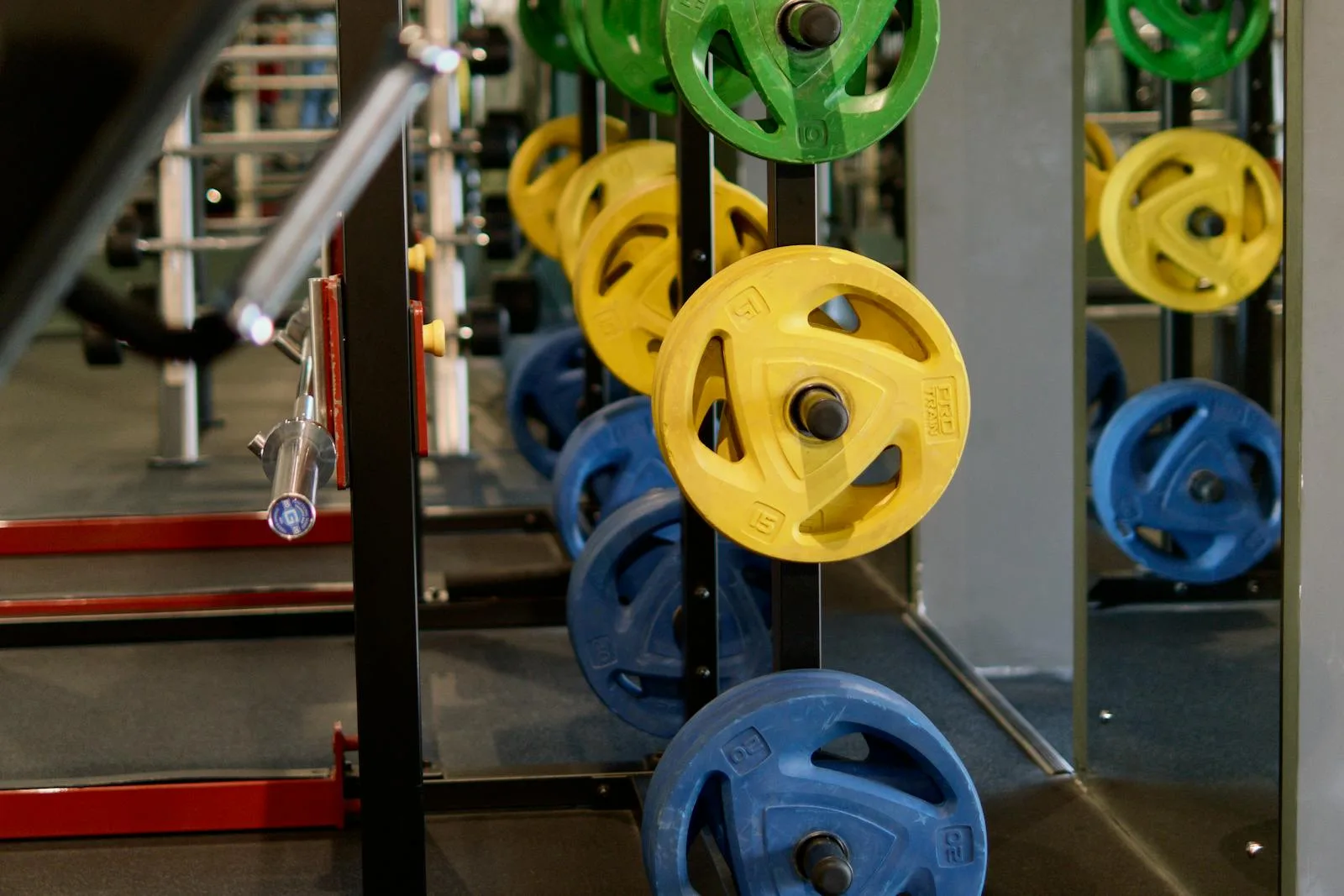
Gyms and fitness studios are a capital-heavy business with one of the cleanest revenue models in small business. The build-out is expensive, the equipment is expensive, and the rent is rarely cheap. The upside is that once you are open and members are signing up, the money comes in on a recurring cycle that lenders genuinely like to underwrite against. If you are looking for a gym business loan, the right structure depends on what you are paying for and how far along you are in your operating history.
This guide walks through how fitness financing actually gets structured by people who do it every week. We will cover the equipment math, why membership revenue moves your rate, and the realistic path to a second location once the first one is humming.
Equipment financing for cardio, strength, and functional rigs
Equipment is the line item most new owners underestimate. A commercial treadmill from Precor, Life Fitness, or Matrix runs $4,000 to $8,000 per unit. Ellipticals land at $3,000 to $6,000, stair climbers at $4,000 to $7,000, rowers at $1,500 to $3,000, and bikes at $2,000 to $5,000. Build out a cardio deck of 15 to 20 pieces and you are easily at $80,000 to $120,000 before you have touched the strength floor.
Strength is the other big slice. A commercial leg press runs $3,000 to $7,000, a smith machine $4,000 to $8,000, a cable system $3,000 to $6,000, and plate-loaded or selectorized stations $2,000 to $5,000 each. Functional and HIIT setups are where pricing varies most: rigs run $5,000 to $25,000, kettlebells $30 to $150 each, plates and bars $20 to $60 each, and rubber turf $5 to $20 per square foot. A full commercial gym at 5,000 square feet typically lands between $80,000 and $250,000 in equipment alone. A boutique studio (Pilates reformers, barre, yoga, spin) runs $30,000 to $150,000 depending on the niche and how many spots you are building for.
Equipment financing is the right structure for almost all of this for one specific reason: the asset secures the loan. The lender takes a first lien on the gear, which means they price the deal off the equipment's expected residual value, not just your personal credit. A commercial treadmill or smith machine still holds meaningful resale value at year 5, and lenders know it. That collateral position translates to lower rates, 0-10% down on most files, and faster approvals than an unsecured term loan. Our equipment financing program structures most gym deals at 36-72 months, which lines up with the useful life of the gear and keeps payments matched to the revenue the equipment produces. For a deeper look at the lease versus finance versus buy math, see our breakdown of equipment financing structures.
On the build-out side, expect $150 to $400 per square foot for commercial fitness space. Locker rooms, plumbing for showers, HVAC sized for high-intensity climate control, and soundproofing all add real dollars. Build-out and working capital do not fit equipment financing, so this is where a term loan or an SBA 7(a) typically picks up the rest of the stack.
Why membership revenue beats project-based every time
Here is the part most gym owners do not realize about underwriting: your revenue model matters as much as your revenue number. Membership-based recurring revenue, billed monthly to ACH or card, creates the kind of predictable cash flow lenders love to underwrite against. A gym with 500 members at $50 per month has $25,000 of guaranteed monthly deposits before a single new member walks in or a single class pack gets sold.
Compare that to a business model built on packages, single sessions, or seasonal traffic. Same annual revenue on paper, very different bank statement. When an underwriter pulls 6 months of statements, what they are looking for is a stable base of deposits that does not crater in slow months. Membership ACH pulls do exactly that, which smooths January and late summer dips that hit fitness hard otherwise. The same pattern holds for medical spas and other recurring-revenue businesses, which is why our med spa financing guide walks through the same logic for aesthetic memberships.
Concretely, here is what we see in our deal flow. A gym doing $40,000 a month in pure walk-in and class-pack revenue typically prices into MCA territory or a higher-rate term loan, often with rates well into the 20s. The same gym with $25,000 of that $40,000 coming from membership ACH frequently qualifies for bank-rate term loans in the low-to-mid teens, and becomes a real SBA 7(a) candidate at the 24-month mark. That is a five-figure-per-year difference in interest on the same loan balance.
Retention matters too. Industry average annual churn runs 30-45% across the broader gym category, with boutique studios typically holding members longer than big-box. Lower churn equals lower default risk in an underwriter's model, which translates directly into longer terms and better rates. If you have churn data, bring it to the deal. It moves the needle.
One quick warning on merchant cash advances. MCAs hurt gyms more than they hurt most other categories because monthly membership billing is the entire asset of the business. A daily MCA debit pulled from your operating account before your monthly billing cycle clears creates timing crunches that compound fast. We have refinanced enough stacked MCAs out of gym operators to know it is almost always cleaner to size the right product the first time. For the comparison, see our guide on recurring-revenue funding for service businesses.
Second-location expansion and the SBA 7(a) path
The first location proves the concept. The second location proves you have a business and not a job. Lenders draw that line clearly, and the SBA 7(a) program is built almost perfectly for the second-location decision once you cross 24 months of operating history.
What underwriters look for on a second location: 24+ months of operating history at location one, demonstrated systemic operations (meaning the gym runs when the owner is not on the floor), and strong membership retention numbers. A typical second-location SBA 7(a) request runs $150,000 to $500,000, covering equipment, build-out, and a working capital cushion in a single closing at 10-year terms. The math works because you are spreading a meaningful loan over a long enough amortization to keep monthly payments aligned with what the new location can realistically produce in months 6 through 18 of ramp. For the full qualification picture, see our guide on how to qualify for an SBA 7(a) loan.
On acquisition multiples, since some of our readers are buying rather than building: independent gyms typically transact at 1.5-3x EBITDA, boutique studios with strong unit economics at 3-5x, and franchise locations with brand value at 4-6x. SBA 7(a) is the dominant product for these deals because it allows seller financing to stack underneath the bank debt, which is how most fitness acquisitions actually get done.
The trade-off with SBA 7(a) is time. Closings run 45-90 days, and the documentation list is long. If you have a lease with a hard build-out start date, you need to start the SBA process the same week you sign the LOI, not the week the contractor mobilizes. A business line of credit can bridge timing gaps between the SBA approval and the actual funding event if you need to move on a deposit, deliver equipment early, or cover the first payroll cycle at the new location.
How TurboFunding Helps
TurboFunding has funded gyms and studios at every stage, from first-location boutiques to multi-unit operators buying their fourth location. We size the right stack to your specific situation: equipment financing for cardio, strength, and functional gear, SBA 7(a) or a term loan for build-out and second-location expansion, and a business line of credit for working capital and seasonal swings. We fund from $10K to $5M, accept 550+ FICO on revenue-based products, require $10K+ per month in deposits and 6+ months in business for most products, and offer same-day funding for qualified working capital files. Our 3-minute application uses a soft credit pull, so checking your rate does not impact your score. Find out More.
Frequently Asked Questions
Q. Can I finance used or refurbished commercial gym equipment?
A. Yes, with conditions. Most equipment lenders will finance certified pre-owned commercial gear from the original manufacturer or an authorized reseller, typically up to 7-10 years old. Private-party purchases of used equipment are harder to finance because the lender cannot verify condition or remaining service life, but we can usually structure a working capital advance against your deposits to fund the purchase outside of equipment financing.
Q. I am pre-revenue and building out my first studio. What can I qualify for?
A. Pre-revenue is the toughest stage in fitness because there is no membership base yet to underwrite against. Best paths are an SBA 7(a) with strong personal credit and a 20-30% equity injection, equipment financing on the gear itself (the asset is the collateral), and personal savings or a home equity line for the build-out. Pre-sales of founding-member memberships at a discount also help, both for cash flow and for showing demand on the deal.
Q. How much working capital should I have at opening?
A. Plan for 4-6 months of operating expenses, not 2-3. Gyms have a longer membership ramp than most retail because acquisition and retention take time to compound. Most owners we work with underestimate marketing spend in months 1 through 4 and overestimate how quickly membership counts will scale.
Q. Will an MCA hurt my chances of getting an SBA loan for a second location?
A. Yes, materially. SBA underwriters look at existing debt obligations carefully, and daily ACH pulls from an MCA show up as a major cash flow drag on bank statements. We have refinanced MCAs into SBA 7(a) loans for second-location expansions, but it is cleaner to avoid stacking MCAs in the first place. See our guide on recurring-revenue service business funding for the comparison.
Q. How fast can I actually get funded?
A. Equipment financing on a clean file: 2-5 business days. Working capital and term loans: same-day to 3 days for qualified applicants. SBA 7(a) for second-location expansion: 45-90 days. Plan your build-out timeline against the realistic closing window for whichever product is doing the heavy lifting.
Gym and fitness studio financing is not one decision. It is a stack of equipment financing for the gear, a term loan or SBA 7(a) for the build-out and expansion, and a line of credit to smooth the months when memberships dip or new equipment lands. Get the structure right at the start and you save real money over the life of the business. If you are opening your first studio, adding cardio or strength to an existing floor, or expanding to a second location, we can help you size the right stack. Apply in 3 minutes with a soft credit pull. Find out More.