
 TurboFunding.com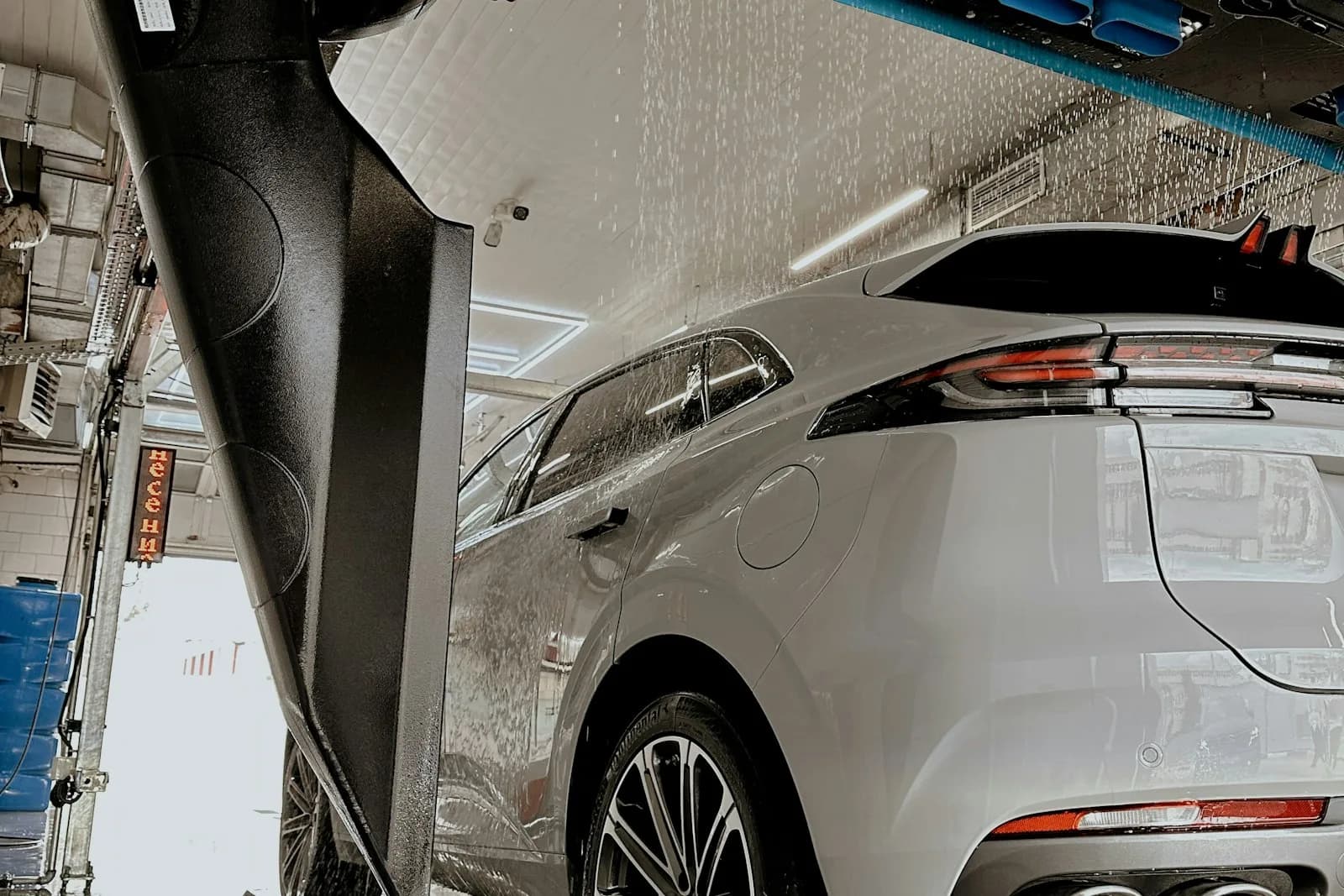
Car wash is one of the most lender-friendly small business categories in the country right now, and it is also one of the most misunderstood by first-time operators looking for capital. The right structure depends almost entirely on what you are actually buying. A ground-up express tunnel with land is a real estate deal. A retrofit on an existing in-bay automatic is an equipment deal. A full-service acquisition with the building leased is something else again. Each path has a different best-fit loan product.
This guide walks through how car wash financing actually gets structured by people who place these deals every week. We will cover SBA 504 versus SBA 7(a) versus equipment financing, why express tunnels underwrite cleanly, and how subscription membership programs change the lender conversation entirely.
SBA 504, SBA 7(a), and equipment financing: the real estate versus equipment split
The first question for any car wash business loan is whether real estate is in the deal. Ground-up express tunnel construction runs $3M to $7M all-in, with land at $750K to $2M, building and tunnel construction at $1.5M to $3.5M, and equipment at $750K to $1.5M. Acquisitions of existing sites typically trade at 4-7x EBITDA, which puts most single-site purchases between $2M and $15M depending on volume and membership base.
When you own or are buying the dirt, SBA 504 is purpose-built for the structure. The split is 50% from a conventional bank lender on a first mortgage, 40% from a CDC debenture at a fixed long-term rate, and 10% owner down. On a $4M site that is $400K of equity instead of the $1M-plus conventional banks usually want. The real estate piece amortizes over 20-25 years, which keeps debt service in line with the cash the site actually throws off. For owner-occupied real estate this is the cheapest long-term capital available to small business owners.
When the real estate is leased or already owned outright, the conversation shifts to SBA 7(a). SBA 7(a) often funds equipment-only purchases, acquisitions where the building is on a long-term lease, or partner buyouts, with 10% down, 10-25 year amortization depending on what you are buying, and a ceiling of $5M. For a full breakdown of qualifying, see our SBA 7(a) qualification guide.
For retrofits and single-piece replacements (a new tunnel conveyor, an updated arch, a high-velocity dryer package, or water reclaim), equipment financing is almost always the right structure. Tickets typically run $50K to $500K on 5-7 year terms, the equipment itself secures the loan, and approvals are fast. The asset still holds meaningful residual at 5 years, which lenders price in. For a deeper dive on lease versus buy versus finance math, see our piece on equipment financing structures.
Express tunnels: economics, throughput, and why lenders love them
Express exterior is the format that has reshaped this industry over the last decade, and lenders have noticed. The unit economics are simply better than every other format. A well-located express tunnel runs 80-150 cars per hour through a conveyor, at an average ticket of $10-$20, with as few as 2 attendants on shift. Gross margins land between 60% and 75%. Compare that to full-service, which moves 25-40 cars per hour at $20-$35 a ticket but requires 8-12 employees and lands at 25-40% margins. Same revenue line, very different operating leverage.
From an underwriting perspective, express tunnels are easy to model. The cost structure is mostly fixed (rent or mortgage, utilities, chemical, a small labor line), so once a site clears its breakeven car count the incremental margin on every additional wash is enormous. Lenders pull bank statements (here is how they read them) and what they want to see is a tight relationship between deposits and wash volume, plus low and predictable operating expense. Express delivers exactly that pattern.
Acquisitions of existing express sites are even cleaner. You hand the lender 12-24 months of point-of-sale data, the chemical and utility bills, the lease or deed, and the membership roster. The deal underwrites itself. For ground-up builds on raw land, the path is typically SBA 504 with an interim construction loan from the bank lender, converted to permanent financing at certificate of occupancy. If you need to move on a site before the SBA closing finishes, a bridge loan can cover the gap.
Full-service and flex-serve formats are still financeable, they just take more work on the underwriting side. Higher labor lines and more revenue volatility mean lenders want stronger DSCR coverage, usually 1.35x or better, plus operating history. The product mix shifts toward term loans with conventional documentation or SBA 7(a) on the longer end.
Subscription programs and DSCR impact
Here is the single biggest underwriting lever in the modern car wash business, and most operators still treat it as a marketing decision rather than a financing one. Unlimited monthly wash memberships at $20-$40 per month do not just smooth revenue. They restructure the entire risk profile of the business in the eyes of a lender.
Consider the math. A single express tunnel with 1,500 active members at $30 per month generates $45,000 in guaranteed ACH deposits every month before a single retail wash. Across a typical year that is $540K of recurring revenue with very high gross margin (incremental cost of an extra wash on an existing member is essentially zero). When an underwriter calculates debt service coverage ratio, that recurring base goes into the numerator as the most predictable cash flow on the entire P&L. The result is materially better DSCR on the same loan size, which means lower rates, longer terms, and bigger approvals.
Concretely, a site doing $80K a month with zero membership penetration looks like a transactional retail business and prices accordingly. The same site doing $80K a month with $35K of that coming from a subscription base looks like a recurring revenue business with retail upside. The second profile frequently moves from MCA pricing into bank-rate territory on the same underlying revenue number. That is a five-figure-per-year interest difference on a typical site loan.
If you are opening or recently opened, this is the highest-leverage thing you can build into the operating plan from day one. Price your membership at a tier that lifetime-value-positive members will pay (typically 2.5-3.5x your average retail ticket), staff your queue specifically to enroll new members at the pay station, and report membership counts and churn alongside revenue on every monthly P&L. Lenders will ask for that data when you come back for the second site. For broader context on lender selection, our guide on bank vs online vs SBA covers which structures fit which growth stages.
How TurboFunding Helps
TurboFunding has funded car wash deals at every stage, from first-site operators acquiring an existing in-bay automatic to multi-site express tunnel groups buying their fifth and sixth locations. We size the right stack to the specific situation: SBA 504 when real estate is in the deal, SBA 7(a) for equipment-heavy acquisitions and build-outs without real estate, equipment financing for retrofits and single-piece replacements, and a business line of credit for chemical inventory and seasonal swings. We fund from $10K to $5M, accept 550+ FICO on revenue-based products, require 6+ months in business and $10K+ in monthly revenue, and use a soft credit pull on the 3-minute application. Find out More.
Frequently Asked Questions
Q. How much equity do I actually need to put down on a $4M express tunnel build?
A. On SBA 504 the owner contribution is typically 10% for an existing business with a strong operator, or 15% for startups and special-purpose properties. On a $4M project that is $400K to $600K, plus closing costs and working capital reserves. Conventional bank financing on the same project usually asks for 25-30% down.
Q. Can I finance the acquisition of an existing car wash with seller financing in the stack?
A. Yes, and it is common. SBA 7(a) allows seller notes to count toward the equity requirement if they are on full standby (no payments) for at least the first 24 months. We have closed deals where seller financing covers 5-10% of the purchase price, the buyer puts in 5%, and SBA 7(a) funds the rest up to the $5M cap.
Q. How are lenders valuing membership bases on acquisition deals?
A. Active paying members are valued similarly to recurring subscription revenue in other industries. Expect the membership base to be a meaningful EBITDA multiplier, with churn rate, average member tenure, and ACH decline rate all factoring in. Sites with 1,000+ stable members typically trade at the higher end of the 4-7x EBITDA range.
Q. What about equipment-only financing for a tunnel retrofit?
A. Straightforward. Most tunnel system upgrades, dryer packages, water reclaim systems, and arch replacements finance at 5-7 year terms with 0-10% down, secured by the equipment itself. Approval is typically 2-5 business days on a clean file. Manufacturer-direct invoices are preferred.
Q. How fast can I get funded?
A. Equipment financing: 2-5 business days. Working capital and term loans: same-day to 3 days for qualified applicants. SBA 504 and SBA 7(a): 45-90 days, no shortcuts. Realistic same-day funding applies to working capital products, not real estate deals.
Car wash financing is not a single decision. It is a stack sized to whether you own the real estate, what format you are operating, and how much of your revenue is recurring. The operators who do this well treat the lender as a long-term partner, build subscription revenue from day one, and match loan term to asset life on every piece of equipment they finance. If you are acquiring your first site, building your first express tunnel, or expanding to your next location, we can help you size the right structure. Apply in 3 minutes with a soft credit pull. Find out More.