
 TurboFunding.com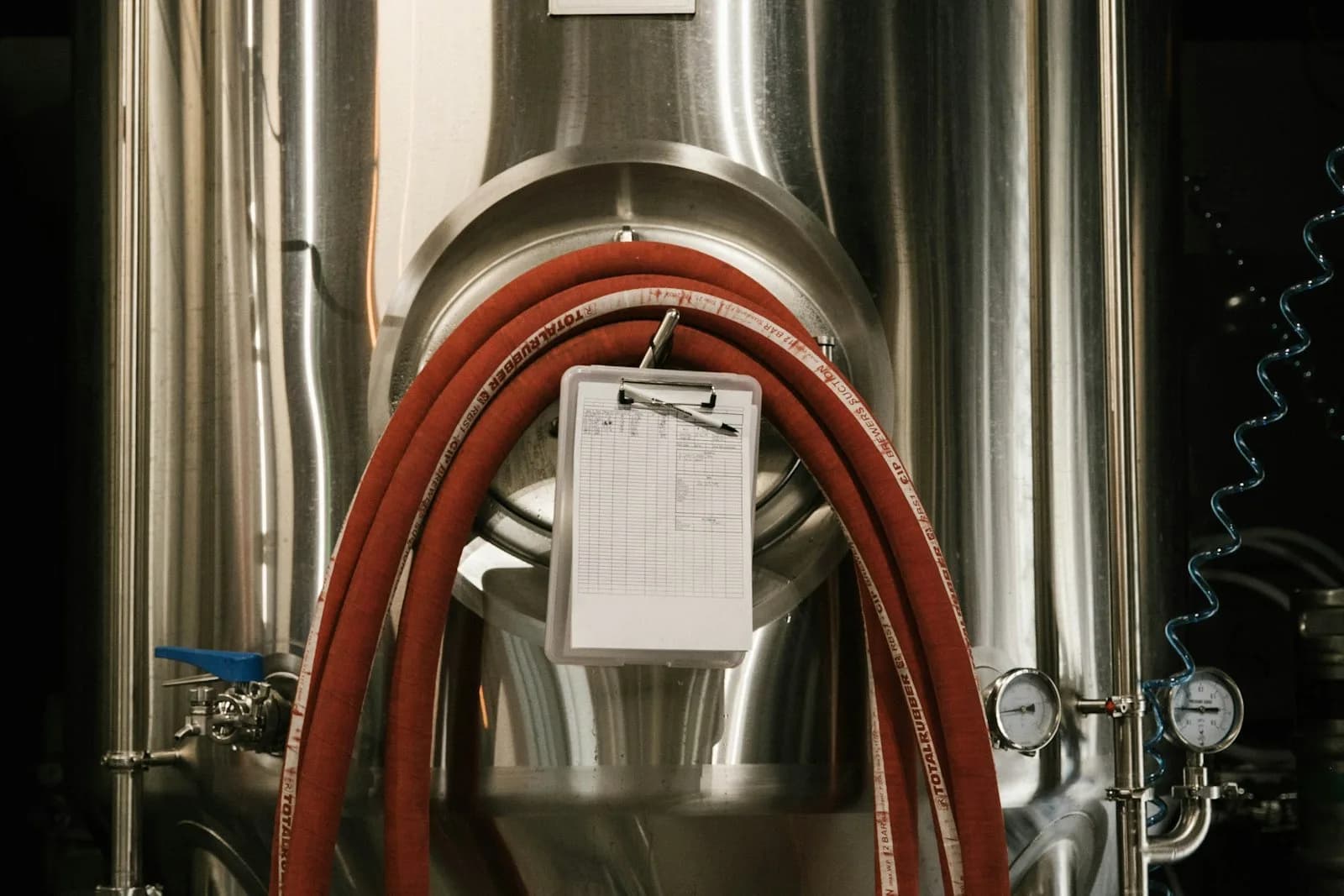
Opening a brewery or distillery is one of the most capital-intensive small business plays out there. The stainless steel alone can run more than the entire build-out budget for a typical restaurant, the licensing timeline is measured in quarters rather than weeks, and your first batch of spirits might not generate revenue for 3 years. If you are looking for a brewery business loan or distillery financing, the structure matters as much as the dollar amount. Get it wrong and you are paying daily ACH pulls on equipment that should have been on a 7-year term.
This guide walks through how craft brewery loans and distillery deals actually get put together by lenders who underwrite this category. We will cover the three big spend buckets, what the TTB timeline does to your funding plan, and the realistic costs for each piece.
Tanks, kegs, and canning lines: where the capex goes
The single biggest line item in any brewery budget is the brewhouse and the cellar. A 15bbl unitank runs $20K to $40K new, or $10K to $20K used in decent condition. A complete 15bbl brewhouse with mash tun, kettle, hot liquor tank, heat exchanger, and a starter set of fermenters lands between $150K and $350K depending on whether you go domestic or imported, manual or semi-automated. Distilleries face a similar bill: a pot still and column setup for craft production starts around $50K and runs past $300K for larger capacities.
Kegging and packaging is the next decision. Manual canning starts under $5K but caps you at maybe 15 cases an hour, which is fine for a taproom-only model but a wall the second you try to wholesale. A low-speed automated canning line runs $80K to $300K and opens up real distribution. Production-scale canning crosses $500K. Bottling lines for distilleries follow the same tiers. The math question every founder has to answer up front is whether you are a taproom-first operation that occasionally cans, or a production brewery that also has a taproom. The answer drives a six-figure spread in your equipment budget.
For all of this, equipment financing is the right structure. The brewhouse, tanks, glycol chiller, and canning line all secure the loan themselves, which means lenders price based on the collateral and your cash flow rather than just your credit profile. Used stainless holds its value remarkably well in craft beer, and lenders know it. Terms typically run 5 to 7 years for tanks and brewhouse gear, 5 years for packaging lines. For the comparison between leasing, financing, and buying outright on equipment this expensive, see our breakdown of equipment financing structures.
Taproom build-out: the case for one SBA package
The second big spend is the space itself. A brewery taproom is not a standard restaurant build. You need trench drains and a properly sloped floor for the wash-down hose, a glycol line run from the cellar to every draft tower, a CO2 line with a dedicated mechanical room or outdoor tank, three-phase power for the brewhouse, and finishes that survive being sprayed with sanitizer twice a day. Realistic build-out costs run $100 to $250 per square foot for a working taproom with a small kitchen, before you add the cold box and the bar itself. A 4,000 sq ft brewery with a 1,200 sq ft taproom can easily land at $500K to $1M just for the leasehold improvements.
This is exactly where SBA 7(a) earns its place in the stack. SBA 7(a) can fund leasehold improvements, brewing equipment, opening inventory, and 6 months of working capital in one closing, up to $5 million, with terms up to 10 years for non-real-estate uses. Compared to splitting the deal across an equipment loan, a separate working capital product, and a credit card for the build-out, one SBA closing means one monthly payment, one set of covenants, and a payment small enough that you can actually survive the slow first year. Our SBA 7(a) program is built for exactly this kind of bundled deal.
If you are buying the building rather than leasing, the conversation shifts to SBA 504. The 504 program is purpose-built for owner-occupied real estate and heavy fixed assets, with a 25-year amortization on the real estate piece and a separate 10-year piece for the equipment. For a brewery owner who has identified a long-term home, the lower blended payment on a 504 is usually the right call. Our full qualification breakdown lives in our guide on how to qualify for an SBA 7(a) loan.
The trade-off across both 7(a) and 504 is time. Closings run 60 to 120 days, and the TTB application runs in parallel. If your contractor needs to mobilize before SBA closes, a bridge loan can cover the gap. We do this fairly often for breweries that signed an LOI in February for a Memorial Day opening.
TTB and state licensing: the timeline nobody plans for
Here is the piece that catches most first-time brewery and distillery founders off guard: you cannot legally produce or sell a single drop of alcohol until you have your federal Brewer's Notice (for beer) or Distilled Spirits Permit (for spirits) from the TTB, plus your state alcohol license, plus your local zoning sign-off. The TTB application alone runs 3 to 6 months from a clean submission. State licensing varies wildly. New York runs roughly 60 to 90 days. California can run 6 months. A handful of states push past 12 months.
What does this mean for your loan? Lenders will not fund operating expenses for a brewery that does not yet have a Brewer's Notice. The risk is too obvious: if the TTB kicks back your application, the lender is holding a loan against an asset that legally cannot produce inventory. What lenders will do is pre-approve your facility subject to licensing, so that the moment your notice posts, the funds release. We structure deals this way regularly.
The practical implication is that you need to start the loan conversation and the TTB application at the same time, ideally 6 months before you want to brew your first batch. The TTB needs your lease, your brewing diagram, your equipment list, and your source-of-funds documentation. That source-of-funds documentation is exactly what your SBA lender will also need. Run them in parallel. While you are waiting on licensing, a business line of credit against the principal's personal guarantee can cover pre-opening soft costs like marketing, deposits, and initial hires. For owners who need flexible short-term capital during this stretch, see our piece on when bridge loans make sense.
Distilleries have one additional working capital wrinkle: barreled inventory. A bourbon, rye, or aged rum that needs 2 to 4 years in barrel before bottling means you are paying rent, utilities, and insurance on inventory that generates zero revenue for years. Most successful craft distilleries fund this gap with a white spirit (gin, vodka, unaged whiskey) that ships fast and brings in cash while the brown spirits age. Your loan stack should reflect that timeline. A 7(a) sized for the equipment and build-out, plus a line of credit sized for 18 months of barrel storage, is a typical structure.
How TurboFunding Helps
TurboFunding has financed breweries and distilleries at every stage, from first-location founders writing their TTB application to established producers adding a second canning line or buying out a partner. We size the right stack for the actual situation: equipment financing for the brewhouse, tanks, and canning line, SBA 7(a) or SBA 504 for the bundled real estate and build-out, and a business line of credit for licensing-period soft costs and barreled inventory. We fund from $10K to $5M, accept 550+ FICO on revenue-based products, and offer same-day funding on working capital for already-licensed operators. Our 3-minute application uses a soft credit pull, so checking your rate has no impact on your score. Find out More.
Frequently Asked Questions
Q. Can I get a brewery loan before I have my TTB Brewer's Notice?
A. You can get pre-approved, but funds will not release for operating capital until your notice is in hand. Lenders will fund equipment purchases earlier if the gear is being delivered to a bonded facility or held by the manufacturer, since the collateral exists regardless of your licensing status. For build-out and working capital, plan on closing within 30 days of your notice posting.
Q. How much should I budget for opening working capital on a new brewery?
A. Plan for 6 months of full operating expenses, not 3. Breweries ramp slower than most food and beverage concepts because distribution accounts take months to land and taproom traffic depends on word of mouth. Most first-time founders underestimate raw materials cost (malt, hops, cans) and the cost of free-pour samples during the launch quarter.
Q. Can I finance used brewing equipment?
A. Yes. Used stainless tanks, kegs, and even brewhouses from reputable resellers finance fairly cleanly because the collateral value is well understood. We typically see 60 to 84 month terms on used gear under 10 years old. Auction-purchased or private-party equipment is harder because the lender cannot verify condition or service history without an inspection.
Q. What if I am a distillery aging brown spirits and have no revenue yet?
A. Pre-revenue distilleries are the toughest stage in this category. Your best paths are an SBA 7(a) with a strong personal guarantee and 20 to 30% equity injection, equipment financing on the still and tanks (the asset is the collateral), and a working capital plan that includes a white spirit shipping in year one to generate revenue while the brown stock ages. We have funded this structure, but it almost always requires meaningful owner equity and a credible production plan.
Q. Will daily MCA payments hurt my chances of getting an SBA loan for an expansion?
A. Yes, significantly. SBA underwriters review existing debt service and the cash flow impact of daily ACH pulls. We have refinanced MCAs into SBA 7(a) loans for breweries, but it adds complexity and time. See our guide on equipment financing structures to understand why the right product up front saves real money over the life of the business.
Brewery and distillery financing is not one decision. It is a series of stacked decisions about equipment, real estate, licensing timing, and working capital, and the founders who get this right treat their lender as a multi-year partner rather than a one-time transaction. If you are opening a first location, adding a canning line, or scaling into wholesale, we can help you size the right stack. Apply in 3 minutes with a soft credit pull. Find out More.