
 TurboFunding.com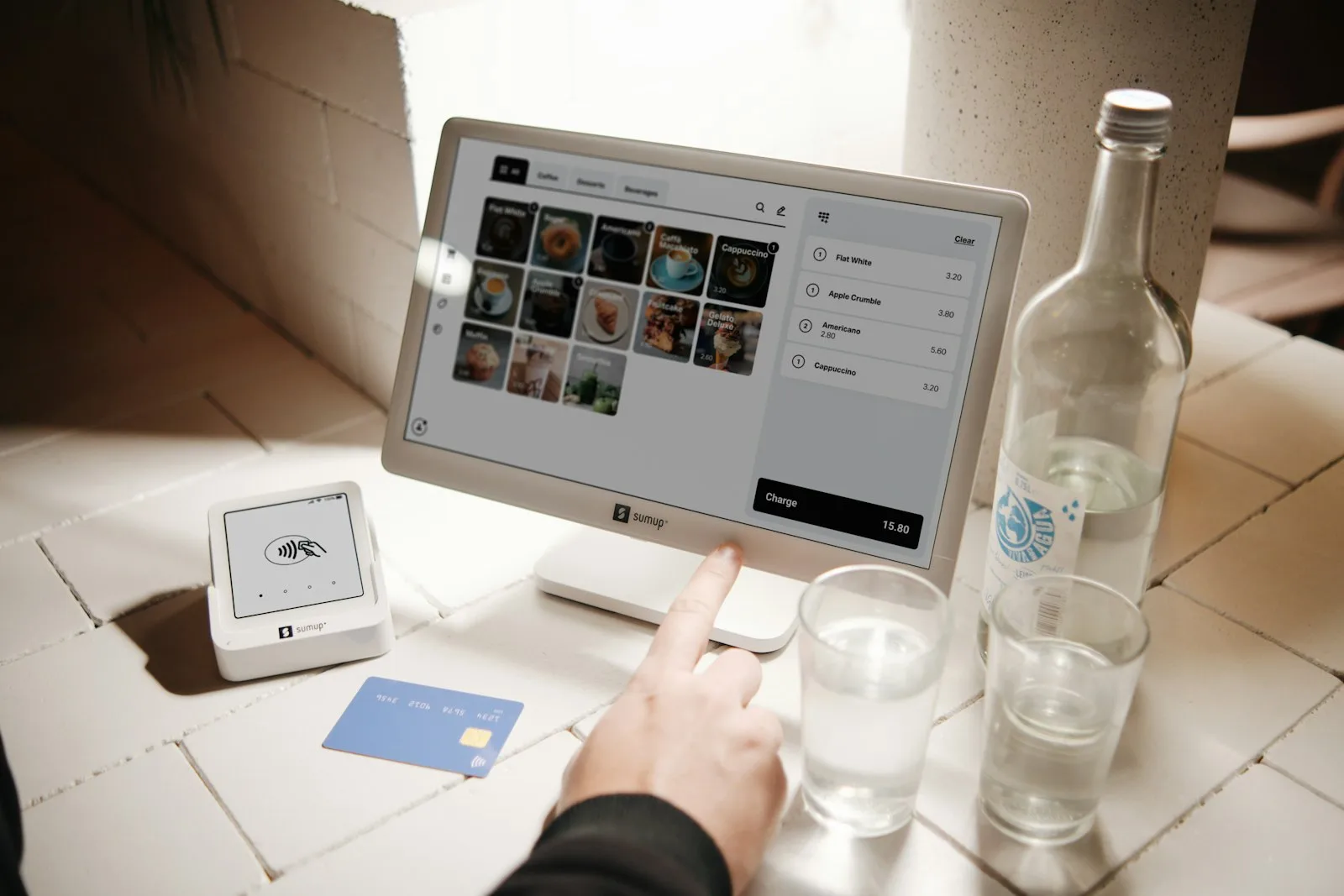
Five years ago, getting a small business loan meant going to a bank, a broker, or an online lender. In 2026, the loan often comes to you. If you process payments on Stripe, sell on Shopify, take orders through DoorDash, or run your restaurant on Toast, you have almost certainly seen a pre-approved capital offer inside the dashboard you already log into every day. That is embedded finance, and for small business owners, it has quietly become the largest origination channel in the country.
The pitch is real: it is fast, it is easy, and the underwriting actually uses data the platform already has on you. The catch is that convenience costs money, and the lock-in is harder to see until you try to leave. This guide covers who is in the embedded finance landscape, what the loans actually cost, and when an independent lender beats the offer sitting in your dashboard.
The embedded finance landscape and how it actually works
The list of platforms now offering capital to their merchants is long and growing. On the payments side: Stripe Capital, Square Loans (now part of Block Capital), PayPal Working Capital, and Mercury Working Capital. On the commerce side: Shopify Capital and Amazon Lending. On the vertical SaaS side: Toast Capital for restaurants, Mindbody Capital for fitness and beauty, ServiceTitan FinanceFlex for home services, and DoorDash Capital for marketplace operators. Brex Loans sits in the corporate card layer. Underneath many of these sits a smaller set of capital providers like Parafin, Kanmon, Lendflow, Wayflyer, and Capchase, which license the lending infrastructure that platforms put their own brand on.
The mechanic is almost identical across the field. The platform watches your processor or sales data, scoring transaction history, revenue volume, customer concentration, refund rate, and chargebacks. When you cross an internal threshold, an offer appears in your dashboard with a pre-approved amount, a fixed factor rate, and a holdback percentage. Typical offer sizing is 10% to 30% of your trailing-12-month revenue on that platform. Click through, accept the terms, and the money lands in your bank account within one to three business days. Repayment is automatic, taken as a daily or weekly percentage of new sales the platform processes on your behalf.
For an established operator on the right platform, the experience is genuinely impressive. No application form, no credit pull, no document upload, no underwriter call. For owners who would otherwise be reaching for a merchant cash advance or a high-rate online product, the embedded offer often prices better and closes faster. That is why this category has grown so quickly and why platforms like Shopify and Square talk about Capital as a strategic moat, not a side business.
Worth understanding: this is structurally close to revenue-based financing, just with the platform in the middle. For the full breakdown of how RBF priced and compares to other capital, see our guide on revenue-based financing.
Convenience versus lock-in and what it really costs
The first thing to understand about embedded loans is how they are priced. The offer almost never quotes you an APR. Instead, you get a factor rate, typically between 1.05 and 1.20 on a 6 to 12 month repayment window. A $100K advance at a 1.13 factor means you repay $113K. Convert that into APR and, depending on how fast the holdback drains the balance, you are usually looking at an effective rate between 10% and 40%. Faster repayment compresses the APR up, slower repayment stretches it down.
That range matters because of where it lands competitively. Embedded finance generally prices well below a true MCA, sometimes below an unsecured online term loan, but almost always above a bank line of credit and well above an SBA loan for owners who can qualify. For an owner with strong credit and clean financials, the embedded offer can be three to five times more expensive than the business line of credit they could get from a community bank if they had the patience to apply.
The bigger issue is lock-in. The repayment mechanism only works if your sales keep flowing through the same platform that issued the loan. Switch processors, move your store off Shopify, leave Toast for a different POS, or stop selling on Amazon, and you have a problem. Most of these agreements include language that lets the platform accelerate the loan or garnish payouts if your processed volume drops materially. Some are more aggressive: a handful of platforms reserve the right to withhold 100% of your seller payouts if you fall behind on the holdback or try to migrate during the loan term.
Two other costs that do not show up in the factor rate: transferability and refinancing. An embedded loan is tied to your platform account. If you sell the business mid-term, the buyer often cannot assume the loan and you have to pay it off at closing, which can crater your net proceeds. If rates drop and you want to refinance into something cheaper, you usually have to pay the embedded loan in full first, because the platform will not subordinate to a new lender. A traditional term loan from an independent lender transfers and refinances cleanly. An embedded loan generally does not.
When embedded wins and when independent makes sense
Embedded finance is the right tool when three things are true. First, you are an established operator on the platform with at least 12 months of consistent processed volume, because that is what the underwriting scores. Second, the capital need is under roughly $100K and is genuinely working capital, meaning you will pay it back inside 12 months out of the same revenue stream the platform is watching. Third, speed matters more than cost, because you cannot afford to wait two to four weeks for a traditional underwriter to do a full file review.
A Shopify store needing $40K for an inventory buy ahead of Q4, a Square-based salon needing $25K to refresh equipment before peak season, a DoorDash-heavy ghost kitchen funding a second virtual brand: these are clean fits for embedded capital. Our guide on retail and ecommerce inventory financing and our piece on ghost kitchen expansion financing cover the sizing math for both cases.
Independent lenders win in almost every other scenario. Any loan above roughly $250K starts to outgrow what most embedded programs will write. Businesses with multiple revenue channels (a restaurant doing dine-in plus catering plus retail) get penalized by embedded underwriting because the platform only sees one channel. Multi-location operators run into per-store offer caps that do not reflect the consolidated business. Real estate purchases, heavy equipment buys, and partner buyouts need SBA 7(a), SBA 504, or equipment financing, none of which the embedded programs offer.
Two situational tells that should push you toward an independent lender even if an embedded offer is sitting in your dashboard. First, if you are planning to sell the business within the next 24 months, do not take an embedded loan unless you are sure you can pay it off at closing without crushing your proceeds. Second, if you are considering switching platforms (a Square merchant evaluating Clover, a Shopify store testing a headless build, a Toast operator looking at Square for Restaurants), an embedded loan effectively locks you in for the loan term. That is a strategic constraint, not just a financial one. Owners who want a clear view of what an independent broker actually does versus a single-source lender should read our piece on the difference between brokers and direct lenders.
How TurboFunding Helps
TurboFunding is an independent broker, which means we are not trying to sell you the one product sitting on our shelf. When you bring us a funding need, we shop the full market: bank term loans, SBA 7(a) and 504, equipment financing, working capital, and short-term revenue products. If the embedded offer in your Shopify, Square, or Toast dashboard genuinely is the best option, we will tell you to take it. More often, we find owners pay 30% to 60% less by pairing a smaller independent line of credit with their platform float, or by refinancing an embedded loan into an SBA structure once they qualify. We fund $10K to $5M, accept 550+ FICO, and work with businesses doing $10K+ in monthly revenue with 6+ months of operating history. Three-minute application, soft credit pull, no impact on your score. Find out More.
Frequently Asked Questions
Q. Will taking an embedded loan show up on my business credit report?
A. It depends on the program. Some embedded lenders report to the commercial bureaus and some do not. Either way, an active embedded loan will show up on your bank statements as a daily holdback, which any future underwriter will see and price into your next deal. Treat it as visible whether it gets reported or not.
Q. Can I have an embedded loan and an independent loan at the same time?
A. Usually yes, but the second lender will size your offer based on the cash flow drag from the first. If the embedded holdback is taking 8% to 12% of your daily revenue, an independent term lender will reduce what they offer to keep your total debt service coverage in a workable range. The cleanest sequence is to pay down the embedded loan, then layer on the bigger independent product.
Q. What happens to my embedded loan if my platform sales drop sharply?
A. The repayment slows in dollar terms because the holdback is a percentage of sales, but the loan still has a minimum monthly payment in most contracts. If your sales fall below that floor for a sustained period, the platform can declare a default and accelerate the balance. Read the minimum-payment clause before you accept.
Q. Why does the same offer amount differ across platforms?
A. Each platform only sees the slice of revenue it processes. A merchant running 60% on Square, 30% on Stripe, and 10% direct will get a Square offer sized off the 60%, a Stripe offer sized off the 30%, and no recognition of the 10% direct. An independent lender looks at consolidated bank statements and sizes off the whole business, which is usually meaningfully larger.
Q. Is embedded finance better than an MCA?
A. For most owners, yes. Pricing tends to land below true MCA territory, and the repayment mechanic is similar enough that an embedded loan can effectively replace an MCA need. That said, neither is the right answer if you qualify for a bank line of credit, an SBA loan, or a longer-term independent product. Our guide on what an MCA actually is walks through the structural comparison.
Embedded finance is one of the most useful developments in small business credit in a decade, and it is also one of the easiest places to overpay if you do not know what else is on the table. The right move is not to refuse the offer in your dashboard. It is to treat it as one quote in a larger conversation, weighed against the cheaper and longer products you may also qualify for. Apply in three minutes with a soft credit pull and we will help you decide which structure actually fits. Find out More. Last updated: May 2026.